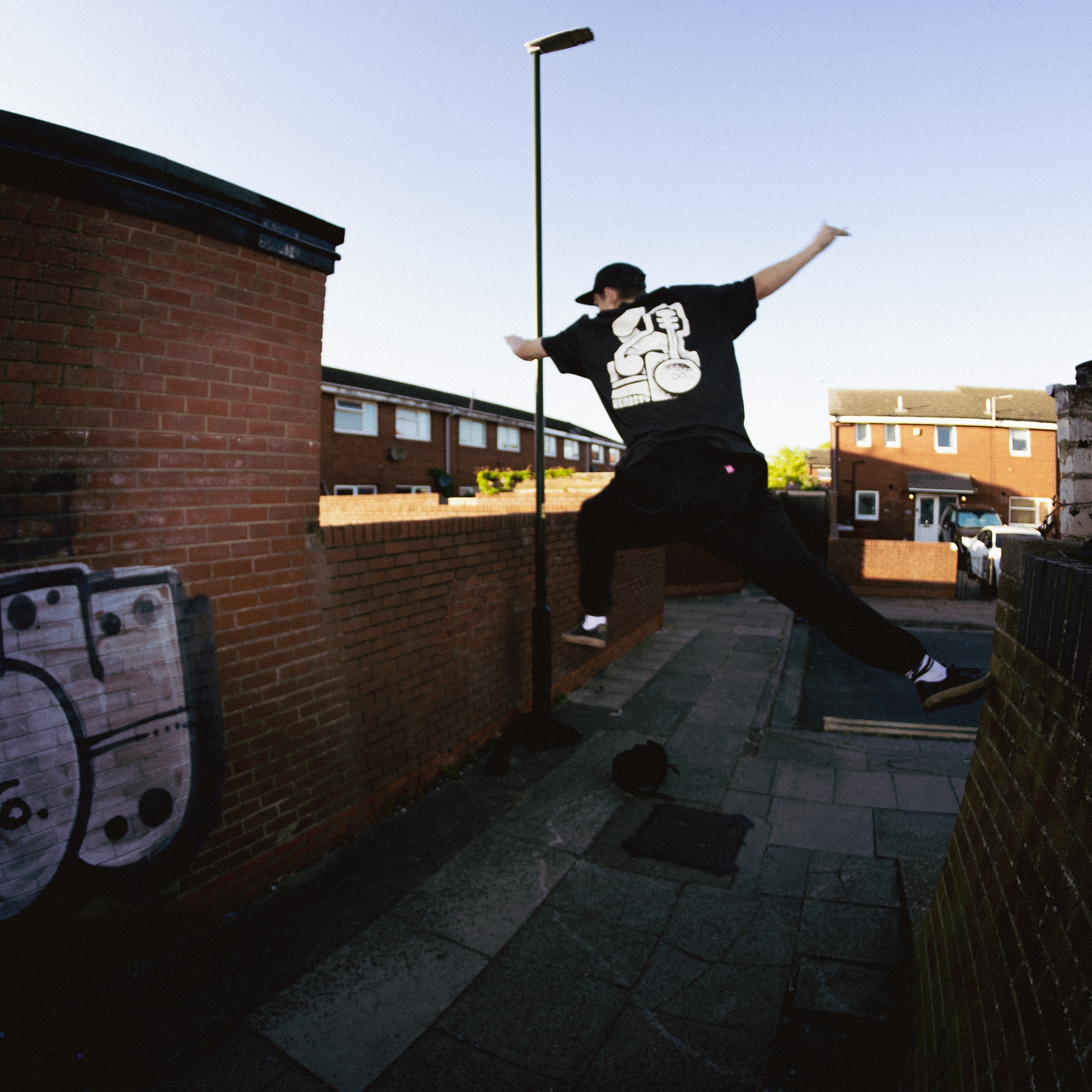
Max Henry (an American parkour legend) recently uploaded a video asking a surprisingly tricky question: should parkour be more structured? He starts by telling a story about chatting with his neighbour, a mountain biker, who asked him what “type” of parkour he trains. It’s a fair question. Max definitely has a style he gravitates toward, but it’s not something formally defined or neatly categorised.
And that’s interesting, because other action sports do have these divisions. Skateboarding has street, vert, and transition. After a quick Google, I found that mountain biking has downhill, endurance, and cross-country. Meanwhile, parkour hasn’t really split itself up in the same way. So are we missing out on something? If these other extreme sports have these clear-cut distinctions, shouldn’t we?
Max points out that, from a coaching perspective, you never really know what brought someone into parkour in the first place. Maybe they watched a Storror video, Ninja Warrior, World Chase Tag, or a bunch of Instagram clips from athletes like Ed Scott or Elis Torhall. For those kids, he argues, it might actually help to have clearer “lanes” to follow as they develop in the sport. Having defined styles or pathways could give newcomers a bit more structure and direction — something parkour doesn’t really offer at the moment.
Max starts with the obvious distinction most people have heard: comp vs street. It sounds intuitive, but there are plenty of athletes who train and excel in both. They’re using the same underlying skill sets across the two settings — so are they really separate formats?
For Max, this leads to what actually matters: intention and goal-setting. That, he argues, is the real point of separation — and it’s something we’ll return to later.
Max’s video then digs into what different sub-genres (avoiding the word “styles” here for obvious reasons) of parkour might look like. I’ll summarise his main points here before moving on — but if you want the full breakdown, I recommend that you check out his video yourself.
Max’s categories are pretty comprehensive, and he’s right that we already put athletes into boxes when we talk about them — no one hesitates to call Elis a style athlete, for example. But what really stood out to me in Max’s video wasn’t the list of categories. It was the idea of intention and goal setting that sits underneath each one.
We’re all drawn to parkour by something different. Something sparks the desire to head out, find a spot, and start moving. But that “something” varies massively from person to person, and while it gets us all out the door, it shapes what we actually do once we’re out training.
For me, that’s the core message of Max’s video: take a moment to examine your motivation for doing the sport. What actually inspires you to go out and train? Once you figure that out, follow it.
It’s easy to slip into a category — I fell into the “style” box when I was younger and ended up feeling confined by it (partly because my technical clips never did well on Instagram, but that’s a separate issue).
My suggestion is simple: think about your motivation, your inspiration, and your goals, and let those guide what you do. You’ll probably end up mixing elements from different styles anyway. But if you’re clear on your intention and you stick to it, you’re almost guaranteed to have a good session.
Article by Charlie Havill

.jpg)