Falling through a Portal
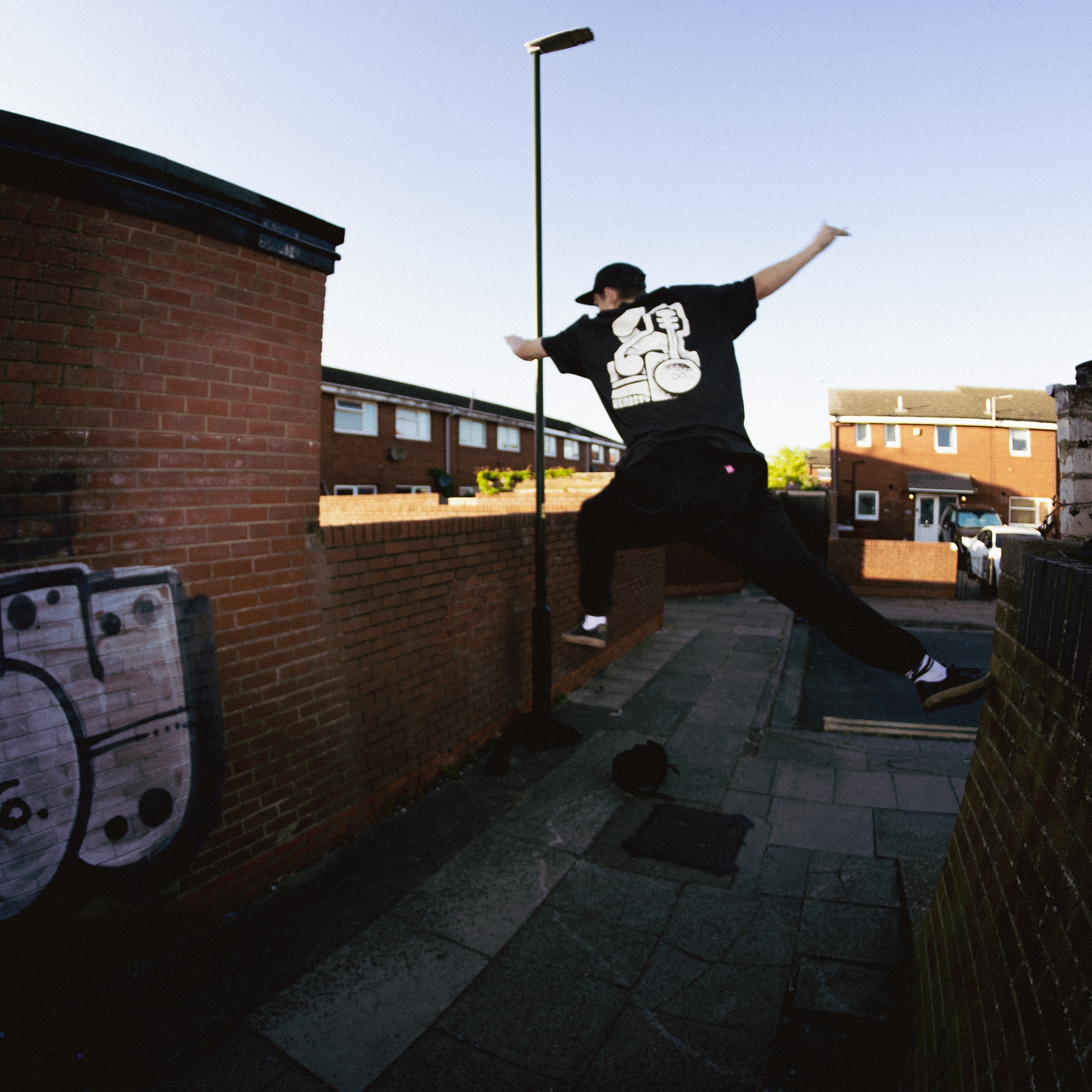
When I took my final jump at the Project Underground 11 Style competition, I didn’t think it would be 26 days until I stood up again. Despite over 15 years of Parkour training, the landing shattered both my heels and has become a life-changing injury. In another Universe, I landed the jump just fine and stood up in jubilation, surrounded by cheering friends. In this one, I was carried to the side, taken to hospital and began a different trajectory. Having a serious injury is like falling through a portal and being ejected out the other side into outer space, perhaps to a different world, with the Earth and life as normal still visible but suddenly very far away. Over 500 days since this happened to me, I report back from the other side.
Crash Landing
Denial was first. Despite the swelling and pain, an array of medical staff assessing me and the clear understanding I couldn’t walk, I didn’t really believe what was happening. The hospital system was alien to me; I’d never stayed a night, alerted the nurses for pain medication or been wheelchaired between wards before. It was an unsettling new theme park ride I was strapped to and could not get off. When the consultant explained my condition and told me I wouldn’t be able to do Parkour again, it felt like I was being spoken to from a distance, or he was addressing someone else. The thought of this becoming a reality was too difficult to actually believe. Deeper down, however, I began to feel a crashing sense of loss and a mounting wave of fear. Could I have really lost the biggest passion of my life? And if so, who would I be without it?
Zero-Gravity
As I couldn’t live independently, I spent the next 3 months being looked after by my parents and moved around using a wheelchair and a commode. It was like a strange Covid-esque, zero-gravity, all-inclusive retreat. Time slowed down to a crawl and I’d spend hours lying in my rented hospital bed watching the outside world, rotting on my phone, and drifting in and out of sleep and nausea. It was often quite claustrophobic not being able to simply stand up out of bed, and I imagined myself as a fly stuck in honey on its back, powerless. But after daily injections for 2 weeks, heel surgery and a variety of medications, the ‘fog of war’ began to clear and I gained back some mental clarity - it was time to fight back and assert myself. Using information from the fracture clinic I divided my progress markers into ‘Phases’:
Phase 1 - Pre-surgery
Phase 2 - Post-surgery, full casts
Phase 3 - Casts off, boots and walking frame
Phase 4 - Boots off, walking with crutches
Phase 5 - Walking without crutches
Having these in mind gave me hope and motivation, and like in Parkour practise, were goals to work towards. Guided by physios, I worked very hard on rehab but also actively took time to do nothing. I would sit in the dark and truly feel the pain and reflect on my relationship with Parkour. Could I get back to my sport? What other areas of my life had I been neglecting? Without much choice, I began to explore, starting with borrowed watercolour paints from next door - this turned out to be a new, relaxing, creative outlet and put down on paper the landscapes I’d been staring at from my wheelchair. My good friend Joe lent me some gym equipment and I found myself really enjoying Bench Press for the first time; each rep felt like pushing the weight of the injury off me. Thankfully I was also able to stay connected to the Parkour community through the 2024 Parkour Takeover League, as I could help with scoring from afar. Seeing how incredible they all are, as if with new eyes, was very moving and their spirit felt close to me with each event.
Returning to Earth
After clearance from the hospital I moved back to Sheffield and although gaining back my independence was a huge step forward, I found the daily pain in my feet very wearing, and I was now living alone. The consistency of the suffering felt like a bad dream I kept waking up into, and affected my mood. Harder still was going back to work as a Parkour instructor and not being able to demonstrate properly, or stop myself feeling envious of those that were training around me. Despite being somewhat mobile again, these months were the most testing and at times I found it difficult to cope. As anyone with an injury will know, progress is not linear and it was thanks to the physios I saw who helped me grind through setbacks and plateaus. I found refuge building myself up in the gym to help me feel strong, and doing activities that took the weight off my feet, like wild-swimming in the Peak District and increasing my hang-time on a bar. I’d not been able to socialise much for a while either, so I pushed myself to get out into Sheffield and actively try to meet new people. The injury was a wake-up call to realise how beneficial forming a network of friends and connections outside Parkour can be.
On the anniversary of my injury I decided to compete again at Project Underground. I paid close attention to how my feet and body were feeling, and with a low-impact run I performed in front of everyone again, but without a hitch, and this time was cheered by friends and supporters. The next day I was lucky enough to go for a run in the Peaks with Ed Scott; this had been a goal I’d discussed with him and to my joy we ran about 7km in the fresh air and sunshine. Both of these events were a huge positive boost to my injury situation and solidified how far I’d come in a year.
A New Trajectory
Writing this now as 2025 comes to a close, my progress has brought me to feeling like two different people. One struggles to walk in the morning, and the other can leap and bound between obstacles quite well. I still have pain everyday and accept that as I get older my feet may develop further problems, but for now I’m focusing on what’s achievable and fighting for the mobile life I want. Not only that, but paying closer attention to how enjoyable things feel, Parkour or otherwise, and finding gratitude for life ‘back on Earth’. Injury gave me distance from Parkour, but this helped me re-evaluate. While I see the sport as the backbone of my life, it does not define me, and I think that actually makes for a much healthier relationship and a better outlook for my future as a whole.
Written by Sam Coppack.
.jpg)