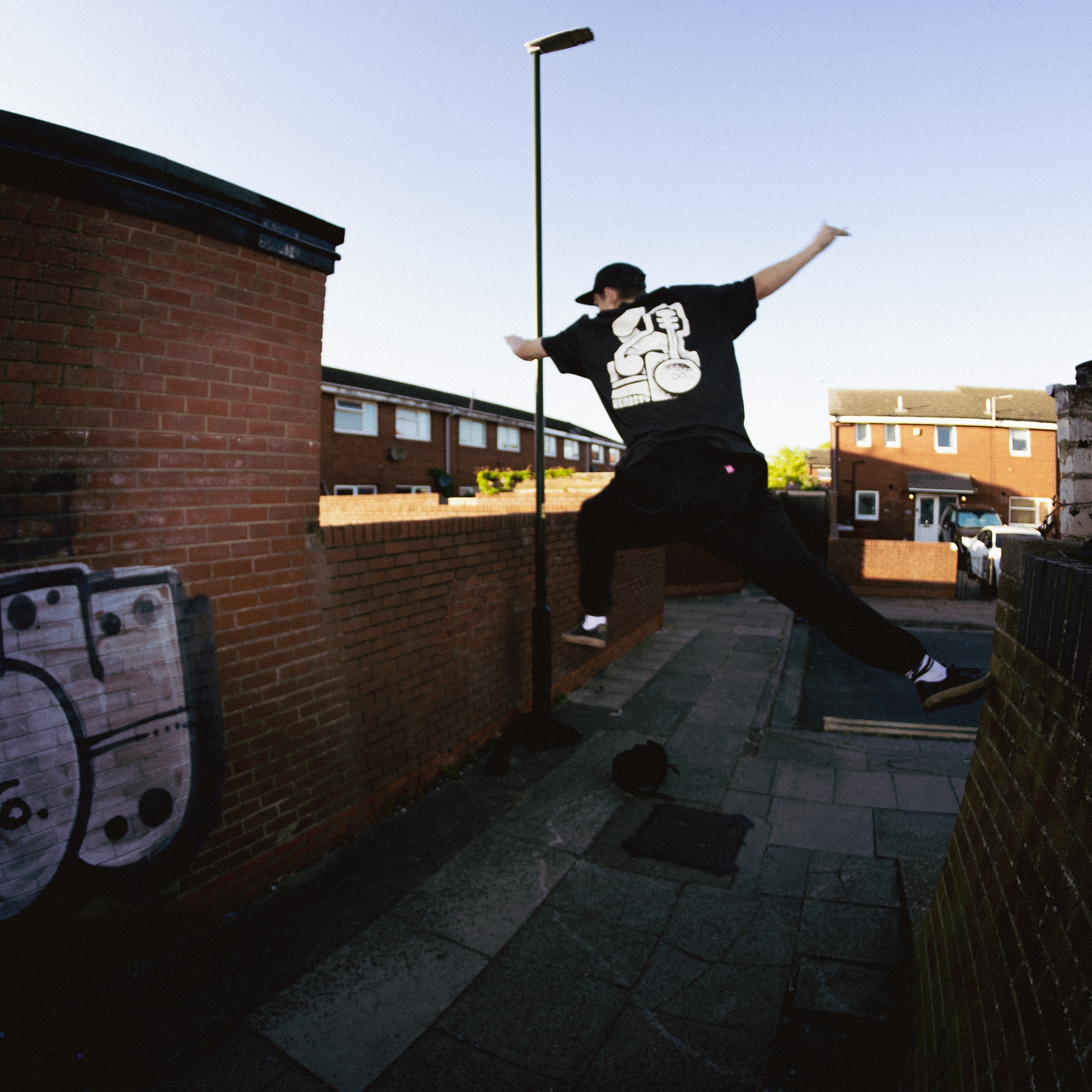
This article was written following a survey with 17 female parkour athletes from the UK, North America and Europe, in which they were asked to describe their lived experiences of parkour competitions. What follows is based on their responses.
Not everyone who practises parkour wants to compete and that’s completely fine. However, many people do participate in competitions and many others would like to, including women. Therefore, we need to ensure that organisations are creating a welcoming and positive experience for all athletes.
This is a big and complex topic and this article can in no way be an exhaustive review, but what it does aim to do is explore what it’s like for women at parkour competitions, why many feel discouraged from taking part, and how to create a fairer playing field. It also aims to identify important barriers and suggest realistic actions that organisers can put into practice right away.
A few social media comments have suggested that women should “stop asking for special treatment”. This isn’t about special treatment, but about equal treatment and providing the same opportunity for female athletes to fulfil their potential as their male counterparts.
For most athletes, competitions are not about competing against someone else, but instead a way to test themselves, try some challenges they wouldn’t normally try, and improve.
“Competing helps me to grow, it pushes me, and makes me stronger. You’re competing with yourself, not others. And if you’ve done your best, you should be proud of that, no matter the result.” - Miranda Tibbling.
When thinking about competing, athletes and practitioners can at times get caught up in worrying about their performance and feeling judged, so taking the time to shift young athletes' perspectives from seeing competitions as somewhere you are judged, to somewhere you improve is a much healthier approach.
Given the right environment, performing alongside people who are better than you can be inspiring, rather than disheartening. The environment created by the organisers of an event is very important, as is the messaging we give to young athletes.
Parkour competitions tend to have a very supportive culture. Everyone wants to see each athlete succeed. Competitive rivalries do exist but they don’t have to be about winning and losing; they can be about striving for a higher level of performance and celebrating those exceptional moments together. Over time, rivals can share many intense experiences, both successes and failures, that often result in lasting friendships.
A lot of women mention that they enjoy competing because it’s fun. Bringing people together for a special event that is well organised and well run can become a memorable day out for both competitors and spectators, increasing the attraction of doing parkour.
Prize money in many cases, although not all, is now equal for men and women, which is a very positive step forward. Parkour prize money is not a significant amount, so most athletes do not enter competitions primarily for the prize pot. However, this is still an important signal to female athletes that they are valued and respected the same as men. These things matter when we are trying to encourage more women to take part.
Some competition organisers are actively trying to improve their events year after year and have been reaching out to female athletes for feedback, which is a very positive step. Asking female athletes for feedback will help event organisers understand the event from an important and often underrated perspective and will highlight issues that they might not have considered.
It is really important to have a female view on your event if you want to make it more inclusive towards women.
Unfortunately, there are still a lot of examples of women feeling excluded from or disrespected in competitions. More about this in part 2 of this article, where we look at what puts women off competing.
To conclude, competitions are a fantastic opportunity to connect with other practitioners in the sport, grow as an athlete and build community. Participation should be encouraged as a vibrant part of our sport, but it is vital that organisations reflect on who they might be unintentionally excluding from their event and actively work to improve each year.
Written by Georgia Donati Clarke

.jpg)