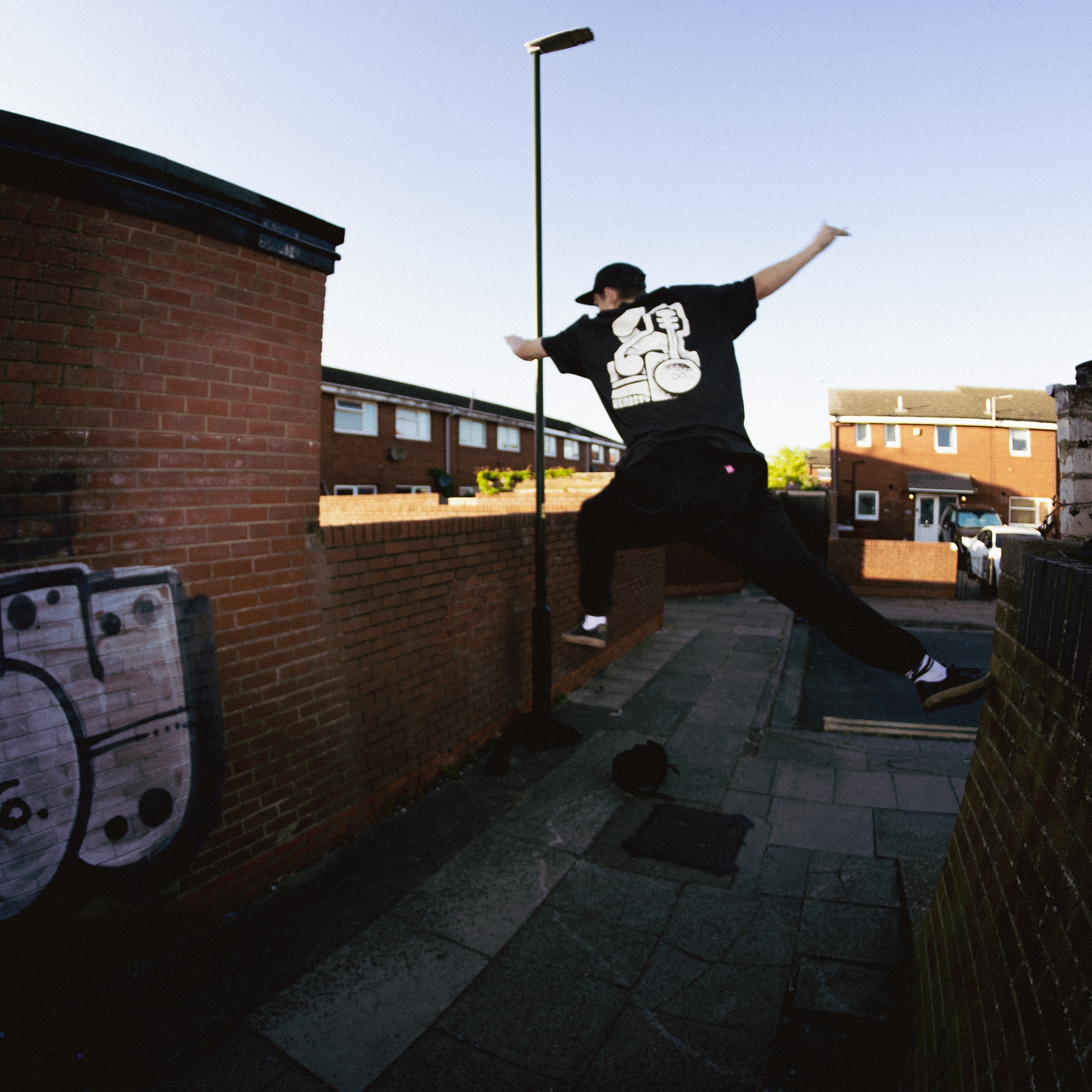
One of the benefits of shattering both my heels in 2024 has been to reflect on injuries, and how to navigate them. As the saying goes, ‘active people get hurt’, so unfortunately whilst we’ll always strive to mitigate injury we will not always succeed, and I think it’s wise to acknowledge this reality. Whether it’s an ‘ankle thing’, a ‘shinjury’ , patella tendonitis or something worse, you are likely to have some setbacks in your Parkour journey...
When we get inured it can often feel like our world has come to a stop and perhaps our very identity is under question. For supporters, it’s easy to feel helpless or not know exactly what to say or do. Every injury journey is different, but the following is an attempt to explain a few ideas that I think could help.
Guilt may be an accompanying feeling to many injuries. With no work to do or anywhere to go, in the initial stages of my injury I had no choice but to lay in bed for many days. Coming to such a grinding halt made me feel conflicted about how I should spend my time, as I knew I needed to rest but I felt guilty for rotting on my phone or spending my days doing nothing productive. Looking back, I’m here to say that you can allow yourself to cope. You do not need to come out of the other side with a new language learnt, musical instrument mastered or profound realisation about life, it is ok to simply get by.
Your positive habits will probably derail but that’s ok because your main prerogative is to recover, not to live optimally. Allow yourself some grace for binging films or eating junk food; this is just to get you through, not to be forever.
Stealing some advice from David Goggins, I think especially during the early stages of injury you need to keep the plane flying, meaning to look after yourself in the ways you usually would. Whilst this sounds obvious, it is all too easy to feel downcast or forget about simple habits like brushing your teeth and keeping your life clean. When I could move from my bed to sitting at a table, I wrote down some small goals — including keeping on top of hygiene, planning for the future, and trying my best to maintain good physical and mental health.
Maintaining these aspects of self-care helped me stay afloat, and at the end of each day I could think to myself that I’d done everything within my power to help myself out.
Injuries are a very personal experience and bring the spotlight of your attention inwards, to your body and mind. When I moved home to be looked after by my parents, I noticed my perception of time warped and my perspective of what was happening drifted from a more objective reality. You’re likely to formulate a sense of how you’re doing and what progression you’re making, but this may not match what’s actually happening. Under these circumstances I believe some sort of journalling is essential, alongside regular physio appointments (if possible). Writing out your day- to-day thoughts produces a more accurate story of your recovery, and helps you keep track and stay optimistic. Physiotherapists helped me see how much progress I’d made, especially when I couldn’t see this myself. I remember being greeted with a big smile as I walked into the hospital gym and my physio saw immediately I was walking better than when he’d last seen me. Moments like this were grounding and uplifting.
I’ve received a tidal wave of support during my injury time, and am incredibly grateful for it…but It's worth noting that, naturally, most of this was at the beginning. Some 500+ days later I do still get asked about how I’m doing, but the ‘buzz’ has understandably died down. In this case I think as an injured person it’s wise to anticipate this, and as a concerned friend it may be useful to consider presence as being more helpful than just encouragement. We must consider the difficulty of the Now. If someone is drowning, it’s probably best not to remind them of when they weren’t drowning, or that they’ll be ok in a few years time! The people who helped me the most checked in with me regularly, expressed their faith in me, and told me about their lives too. They felt close by and made me laugh, which made for a good defence against isolation and gloom. If you’re reading this right now, think about who has been injured, and whether you could send them some warmth.
When you can’t focus on your passion, you have the opportunity to step back and focus on the world around you. Pay attention to what pulls your interest, and investigate with curiosity. You might be surprised by what you get up to - bird-watching (yes really) and watercolour painting became new enjoyable pursuits for me. The constraining nature of injuries can also help guide us. When I broke my scaphoid bone in a Longboarding accident, I spent more time working on precision jumps, footwork and landings, and these improved. With my feet injury I’ve switched the other way and focused more on my upper body with hanging, climb-ups and Bench Press. Observing from a more detached perspective, I’ve also been able to study how other Parkourists move and train, their behaviours, lifestyles and flaws. I’ve been able to shift my mind away from just my own progression and help my students advance. I’ve found a reclamation of joy for being able to dothe smallest jumps and flows, and tried to focus on what is still achievable. Whilst difficult to comprehend in the moment, your recovery time may reveal hidden opportunities.
Lastly, one of the strongest pieces of advice I have is this - don’t let your injury have the final say of your day. On one of my hardest days, where I was in the most pain and feeling the most helpless, I found a small voice of resistance in my mind and began doing as many stretches and exercises as I could on my hospital bed. It felt empowering to have some level of control over my situation and I went to bed with some tenacity and hope. It doesn’t have to be much, but try to do something within your power to finish the hard days on your terms. Injuries may be inevitable for active people like ourselves, but by staying connected and sharing our experiences we can take back some control, learn from each other, and perhaps come out the other side with new perspectives.
.jpg)